
Credo Logo

Credo

Adeste Fideles

also known as O Come, All Ye Faithful, Adeste Fideles Laeti Triumphantes, Venite Adoremus

0 / 4

Adeste, fideles, laeti triumphantes, venite, venite in Bethlehem. Natum videte Regem angelorum: venite, adoremus, venite, adoremus, venite, adoremus Dominum.

Come, you faithful, joyful and triumphant; come, come to Bethlehem. See him born, the King of angels: come, let us adore, come, let us adore, come, let us adore the Lord.

Deum de Deo, lumen de lumine, gestant puellae viscera, Deum verum, genitum, non factum: venite, adoremus, venite, adoremus, venite, adoremus Dominum.

God from God, light from light, the maiden's womb bears him: true God, begotten, not made. Come, let us adore, come, let us adore, come, let us adore the Lord.

Cantet nunc io chorus angelorum, cantet nunc aula caelestium: Gloria in excelsis Deo! Venite, adoremus, venite, adoremus, venite, adoremus Dominum.

Now let the choir of angels sing for joy, now let the court of heaven sing: Glory to God in the highest! Come, let us adore, come, let us adore, come, let us adore the Lord.

Ergo qui natus die hodierna, Iesu, tibi sit gloria: Patris aeterni Verbum caro factum: venite, adoremus, venite, adoremus, venite, adoremus Dominum.

So, Jesus, born on this very day, to you be glory: Word of the eternal Father, made flesh. Come, let us adore, come, let us adore, come, let us adore the Lord.
About the Adeste Fideles

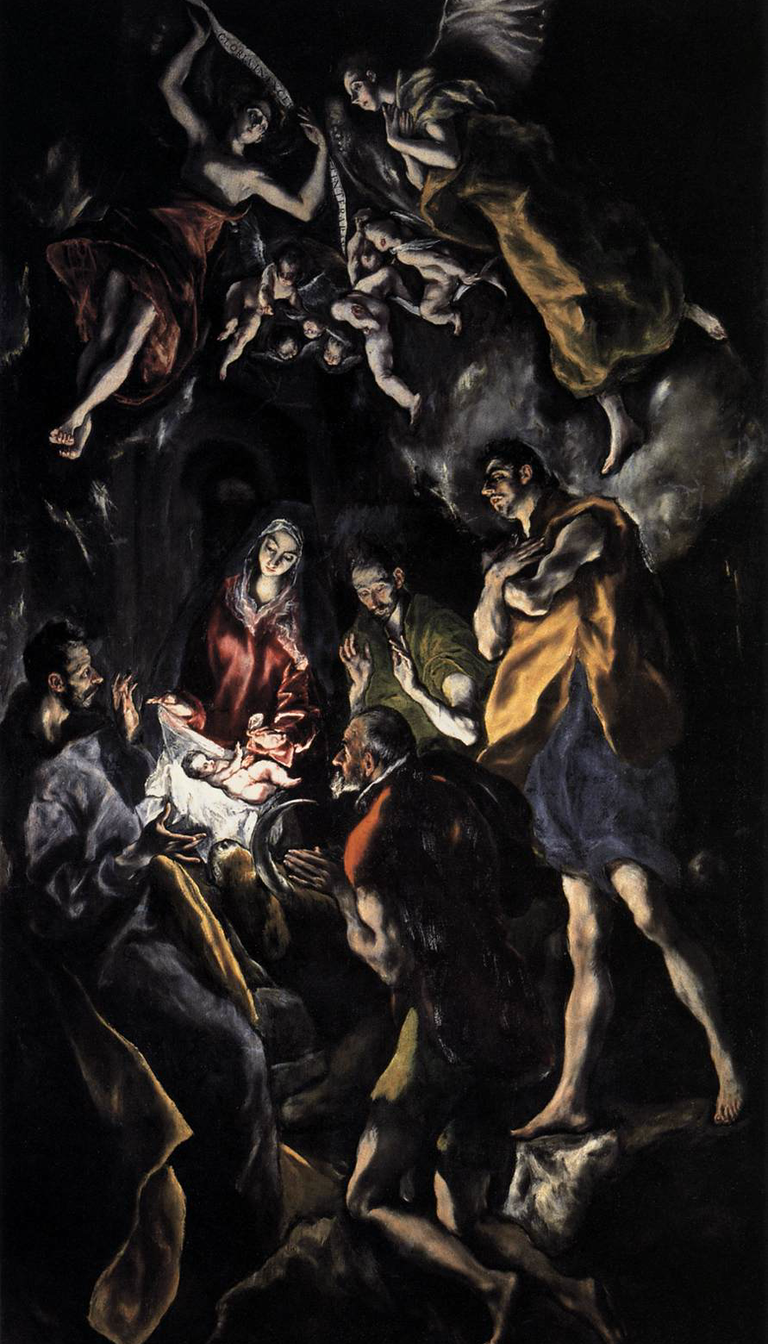
Adeste fideles was written in Latin around 1743 by John Francis Wade, an English Catholic layman who copied chant for a living at Douai in France. It calls the faithful to Bethlehem to see the newborn King of angels, and its second verse sings the Nicene Creed itself: Deum de Deo, lumen de lumine, "God from God, light from light", true God, begotten, not made. Every verse ends in the same invitation: venite, adoremus Dominum, "come, let us adore the Lord".

When prayed: Sung throughout Christmastide, and above all at Midnight Mass and the Masses of Christmas Day, often as the opening or closing hymn. Many parishes sing at least the first verse in Latin even when the rest is in English.

Line-by-line translation

The Latin text of the Adeste Fideles alongside its English translation, line by line.

Latin English
Adeste, fideles, laeti triumphantes, venite, venite in Bethlehem. Natum videte Regem angelorum: venite, adoremus, venite, adoremus, venite, adoremus Dominum. Come, you faithful, joyful and triumphant; come, come to Bethlehem. See him born, the King of angels: come, let us adore, come, let us adore, come, let us adore the Lord.
Deum de Deo, lumen de lumine, gestant puellae viscera, Deum verum, genitum, non factum: venite, adoremus, venite, adoremus, venite, adoremus Dominum. God from God, light from light, the maiden's womb bears him: true God, begotten, not made. Come, let us adore, come, let us adore, come, let us adore the Lord.
Cantet nunc io chorus angelorum, cantet nunc aula caelestium: Gloria in excelsis Deo! Venite, adoremus, venite, adoremus, venite, adoremus Dominum. Now let the choir of angels sing for joy, now let the court of heaven sing: Glory to God in the highest! Come, let us adore, come, let us adore, come, let us adore the Lord.
Ergo qui natus die hodierna, Iesu, tibi sit gloria: Patris aeterni Verbum caro factum: venite, adoremus, venite, adoremus, venite, adoremus Dominum. So, Jesus, born on this very day, to you be glory: Word of the eternal Father, made flesh. Come, let us adore, come, let us adore, come, let us adore the Lord.

Vocabulary

Word-by-word definitions and example uses. Tap any word to learn its meaning, then return to the prayer with new ears.

adeste

Definition: be present; come here (plural command)

Adeste, amici! (Come here, friends!)

fideles

Definition: faithful ones; believers

Fideles in ecclesia cantant. (The faithful sing in the church.)

laeti

Definition: happy; joyful

Pueri laeti sunt. (The boys are happy.)

triumphantes

Definition: triumphing; rejoicing in victory

Milites triumphantes urbem intrant. (The triumphing soldiers enter the city.)

venite

Definition: come (plural command)

Venite ad mensam. (Come to the table.)

in

Definition: in; into; on

Puer in horto est. (The boy is in the garden.)

Bethlehem

Definition: Bethlehem, the town in Judea

Christus in Bethlehem natus est. (Christ was born in Bethlehem.)

natum

Definition: the one who is born; newborn (accusative)

Infantem natum videmus. (We see the newborn child.)

videte

Definition: see; look at (plural command)

Videte stellam claram. (See the bright star.)

regem

Definition: king

Regem honoramus. (We honor the king.)

angelorum

Definition: of the angels

Cantus angelorum dulcis est. (The song of the angels is sweet.)

adoremus

Definition: let us adore; let us worship

Deum adoremus. (Let us adore God.)

dominum

Definition: Lord; master

Dominum laudamus. (We praise the Lord.)

deum

Definition: God

Deum amo. (I love God.)

de

Definition: from; of; concerning

Liber de vita est. (The book is about life.)

deo

Definition: from God; to God (ablative or dative)

Gloria Deo sit. (May glory be to God.)

lumen

Definition: light

Lumen in tenebris lucet. (The light shines in the darkness.)

lumine

Definition: by light; with light; from light

Via lumine lunae clara est. (The road is bright with the light of the moon.)

gestant

Definition: they carry; they bear

Puellae flores gestant. (The girls carry flowers.)

puellae

Definition: of the maiden; of the girl (genitive singular)

Liber puellae novus est. (The girl's book is new.)

viscera

Definition: womb; inmost parts; heart

Viscera matris filium portant. (The mother's womb carries the son.)

verum

Definition: true; real

Amicum verum habeo. (I have a true friend.)

genitum

Definition: begotten; born

Filium genitum pater amat. (The father loves the begotten son.)

non

Definition: not

Non timeo. (I am not afraid.)

factum

Definition: made; done

Opus factum est. (The work has been done.)

cantet

Definition: let him, her, or it sing; may he, she, or it sing

Cantet chorus laetus. (Let the joyful choir sing.)

nunc

Definition: now

Nunc venio. (Now I come.)

io

Definition: a shout of joy; hurrah

Io! Omnes gaudent. (Hurrah! Everyone rejoices.)

chorus

Definition: choir; chorus

Chorus carmen cantat. (The choir sings a song.)

aula

Definition: hall; court; palace

Aula regis magna est. (The king's hall is large.)

caelestium

Definition: of the heavenly ones; of heavenly things

Lux caelestium clara est. (The light of the heavenly ones is bright.)

gloria

Definition: glory; praise; honor

Gloria Deo datur. (Glory is given to God.)

excelsis

Definition: in the highest places; in the heights

Deus in excelsis laudatur. (God is praised in the highest places.)

ergo

Definition: therefore; so

Ergo laeti sumus. (Therefore we are joyful.)

qui

Definition: who; which

Vir qui venit amicus est. (The man who comes is a friend.)

natus

Definition: born

Puer hodie natus est. (The boy was born today.)

die

Definition: on the day; by day

Die festo cantamus. (On the feast day we sing.)

hodierna

Definition: today's; of this day

Die hodierna gaudemus. (On this day we rejoice.)

Iesu

Definition: Jesus; O Jesus

Iesu, miserere nobis. (Jesus, have mercy on us.)

tibi

Definition: to you; for you

Tibi donum do. (I give a gift to you.)

sit

Definition: may it be; let it be

Pax tibi sit. (May peace be to you.)

patris

Definition: of the father

Vox patris clara est. (The voice of the father is clear.)

aeterni

Definition: eternal; everlasting

Amor aeterni Dei magnus est. (The love of the eternal God is great.)

verbum

Definition: word; the Word

Verbum sapientiae audio. (I hear a word of wisdom.)

caro

Definition: flesh

Caro fragilis est. (The flesh is weak.)

About the Adeste Fideles

Who wrote Adeste fideles?

The Latin hymn is credited to John Francis Wade (c. 1711–1786), an English Catholic who lived at Douai in France, where he copied and sold plainchant for chapels. His earliest signed manuscript of it dates from about 1743, and he printed it in his Cantus Diversi of 1751. Frederick Oakeley's English translation, "O come, all ye faithful", followed in 1841.

What does 'Adeste fideles, laeti triumphantes' mean?

"Come, you faithful, joyful and triumphant." Adeste is a plural command, "be here, come"; fideles are the faithful; laeti triumphantes, joyful and triumphant. The verse goes on: venite in Bethlehem, natum videte Regem angelorum, "come to Bethlehem, see Him born, the King of angels."

Why does the second verse sound like the Creed?

Because it is the Creed. Deum de Deo, lumen de lumine, Deum verum, genitum, non factum are the words of the Nicene Creed said at every Sunday Mass: "God from God, Light from Light, true God, begotten, not made." The hymn sets them beside the manger: the Child carried in the Virgin's womb is the eternal Son.

How many verses does Adeste fideles have in Latin?

Wade wrote four: Adeste fideles, Deum de Deo, Cantet nunc io and Ergo qui natus. Later writers added four more (En grege relicto, Stella duce, Aeterni Parentis and Pro nobis egenum), so some books print eight. The four given here are the ones most often sung.

How do you pronounce Adeste fideles?

In Church Latin: ah-DES-teh fee-DEH-les, LEH-tee tree-oom-FAHN-tes. The refrain is veh-NEE-teh ah-doh-REH-moos DOH-mee-noom. Press play at the top of this page to hear each verse read slowly.

Other Latin Catholic prayers

Pray this in Latin — fluently.

Credo teaches you to read the Adeste Fideles (and every other Catholic prayer) in Latin the way the saints did — through the words themselves, not grammar drills.

Download Credo for iOS

Credo is on iPhone today. Leave your email and we'll write the day it reaches Android.

Scan with your iPhone camera

It opens Credo on the App Store.

Or view it on the App Store